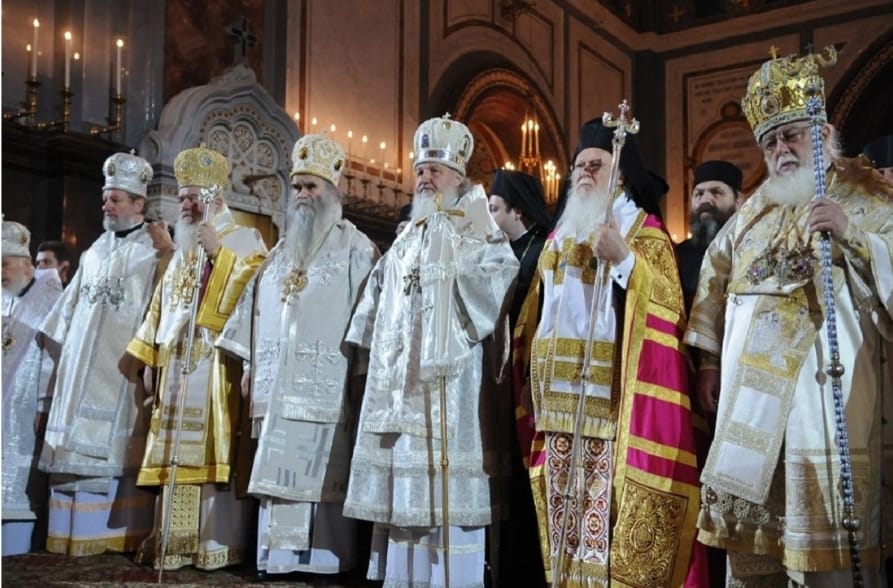
Episcopal Authority
In the Orthodox Church, episcopal authority is apostolic, pastoral, and sacramental. It is not domination, but service in truth and love, exercised within the communion of the Church.
Apostolic Origin
Episcopal authority comes from Christ through the Apostles.
Christ → Apostles → Bishops
Transmitted by apostolic succession (laying on of hands)
Preserves the faith “once delivered to the saints”
As taught by Ignatius of Antioch (1st–2nd century):
“Where the bishop is, there is the Church.”
Sacramental Authority
The bishop is the chief celebrant and guardian of the Mysteries.
Ordains deacons and presbyters
Consecrates chrism (where custom applies)
Oversees valid celebration of the Eucharist
Guards sacramental order and discipline
All parish sacraments are offered in communion with the bishop
Doctrinal Authority (Guardian of the Faith)
Bishops are teachers, not innovators.
Preserve Holy Scripture and Holy Tradition
Teach the faith of the Ecumenical Councils
Protect the Church from heresy
Speak with authority together, not alone
Orthodox authority is conciliar, not centralized in one individual.
Pastoral Authority (Spiritual Fatherhood)
Episcopal authority is shepherding, not ruling.
Care for clergy and faithful
Correct with patience and love
Heal divisions
Guide souls toward salvation
The bishop is a physician of souls, accountable to God.
Canonical Authority
Bishops govern according to canons, not personal will.
Appoint clergy
Maintain church discipline
Resolve disputes
Protect church order
Authority is limited by:
Sacred Canons
Synod of bishops
Apostolic Tradition
Conciliar Balance (Sobornost
No bishop rules alone.
Authority exercised within synods
Mutual accountability among bishops
Unity without tyranny
This protects the Church from both anarchy and abuse of power.